DStv for Farms and Smallholdings in the Breede Valley
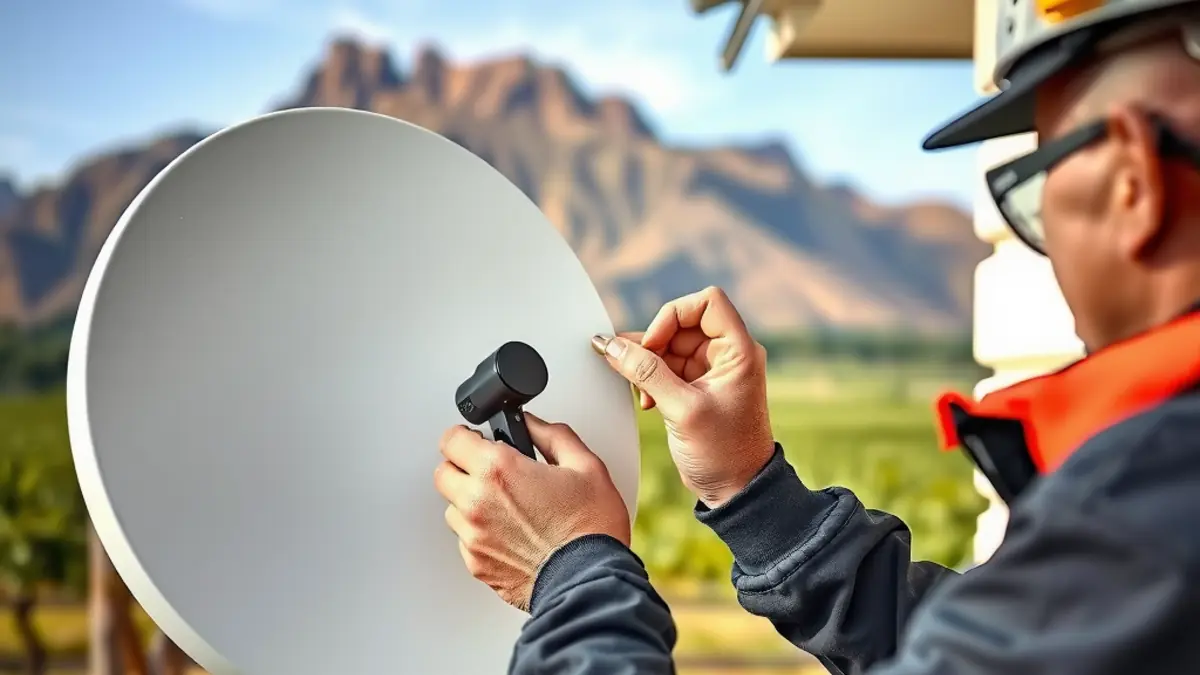
A DStv installation on a farm or smallholding near Worcester needs more planning than a typical suburban job. Buildings may be far apart, cable routes may cross exposed areas, access can be difficult and the most convenient wall may not have the required view. The goal is not simply to attach a dish. It is to create a serviceable system suited to the property.
This guide covers practical decisions for farms around Rawsonville, De Doorns, the Hex River Valley, Robertson and the wider Breede Valley. It focuses on satellite television while noting where power, networking and building management affect the result.
Start with the viewing requirement
List where television is actually needed: the main house, a cottage, staff accommodation, a tasting room, guest unit or office. Then decide whether each space needs independent channel control or whether one source may be distributed. These are different technical requirements and should be priced separately.
A straightforward new DStv installation for one house is different from several decoders across separate buildings. Avoid buying splitters, boosters or extra cable before the layout has been assessed. Equipment that works for one signal type may be unsuitable for another.
Choosing a practical dish position
The dish needs a clear line of sight, a rigid mounting surface and access for future testing. The highest roof is not automatically the best location. A stable wall or lower structure can be preferable if it has the correct view and keeps the equipment away from vehicle movement, livestock and casual interference.
Nearby trees, new sheds, tanks and seasonal vegetation can obstruct the signal path. Consider how the property may change, but do not remove trees solely on assumption. The installer should identify the required direction and test the proposed point. Where a dish has moved or reception is unstable, accurate dish alignment should include a check of the bracket and mounting surface.
Plan long cable routes properly
Long routes increase material and labour and can introduce signal loss or physical damage. Cable should not lie loose across yards, hang from fences or run through standing water. It needs appropriate support, weather-resistant connections and protection where it enters a building or passes through a work area.
| Route risk | Planning response |
|---|---|
| Vehicles and machinery | Keep cable out of traffic paths or use a properly designed protected route |
| Animals | Secure accessible cable and avoid loose loops |
| Sun and weather | Use suitable exterior materials and protected connectors |
| Separate buildings | Assess distance, earthing, signal design and maintenance access |
| Wall entry | Agree the position and weather sealing before drilling |
Do not assume that burying ordinary cable is adequate. Underground or inter-building routes need the right design for the environment. The installer should explain the proposed path and any limitations.
Power quality and decoder protection
Satellite equipment still depends on stable electrical power. Farms may experience outages, generator changeovers or voltage problems. A decoder that repeatedly restarts should not automatically be blamed on signal. Check the power source safely and use qualified electrical help for supply faults.
A surge protection strategy can reduce risk, but no device makes equipment immune to lightning or severe electrical events. Never handle external cable, a dish or connected equipment during a thunderstorm. If lightning damage is suspected, isolate equipment only if it is safe and arrange assessment.
Internet features are a separate layer
Explora and Ultra features that use apps, streaming or downloads need a suitable internet connection in addition to satellite signal. A perfect dish signal cannot fix weak WiFi, exhausted mobile data or a router fault. Likewise, a fast internet link does not replace the satellite feed for services that depend on it.
Where coverage is poor across a large house or several buildings, request a planned WiFi and fibre network installation. The technician should map where connectivity is required and account for walls, distance, power and backhaul. A random extender is not always an effective farm-wide solution.
Multiple rooms and separate buildings
If two decoders belong to one household and need independent viewing, compatibility and account rules must be confirmed before installation. Extra View is not simply an HDMI split. It involves supported decoders, signal hardware, configuration and account activation.
Separate cottages or guest units may need a different arrangement, particularly where occupants require independent control or accounts. Describe who uses each building and whether the installation is domestic, staff, hospitality or commercial. This prevents an installer from designing for the wrong purpose.
Farm accommodation and common viewing spaces
A shared lounge, staff area or guest facility can create distribution and control questions. Decide who may operate the equipment, where the decoder will be secured and who reports faults. If many units depend on shared infrastructure, document the cable and equipment layout so future technicians do not disconnect working feeds while tracing one problem.
For a lodge, venue or business, use a commercial DStv assessment and confirm subscription or licensing requirements through the appropriate official provider. Domestic assumptions should not be applied automatically to customer-facing premises.
Access information saves wasted trips
- Send an accurate location pin and farm name.
- State which gate to use and who will answer the phone.
- Describe gravel roads, low-water crossings or vehicle restrictions honestly.
- Arrange keys for locked buildings and access to the television rooms.
- Keep dogs and livestock away from ladders and work zones.
- Say if mobile reception is weak so an alternative meeting plan can be made.
- Identify operating hours that could restrict work near packing or hospitality areas.
Prepare for hot summers and winter weather
The Worcester district experiences hot, dry summer periods and cooler winter weather with more rain and wind. Exterior components face strong sun, temperature changes, dust and water exposure. Regular visual checks from ground level can identify loose cable, damaged clips or vegetation growth before reception fails completely.
Roof work should wait when rain, wind or heat makes access unsafe. This may affect appointment timing, especially at exposed valley properties. Safety is more important than finishing a non-emergency television job in unsuitable conditions.
Diagnosing faults without guessing
Record the exact error message, when the problem began and whether all channels and televisions are affected. Check that the decoder has power and the television is on the correct input. Do not rotate the dish, cut cable or reset every setting, because these actions can add faults and erase useful clues.
Intermittent reception may come from movement, connectors, cable damage, power or the decoder. A structured test should work from symptoms toward the cause. If an animal or machine has damaged an exposed route, show the technician the likely point but avoid touching conductors or unsafe equipment.
A farm-ready handover
At completion, test each intended viewing point and internet-connected feature included in the job. Ask where cables run, which power supply serves the decoder and what not to unplug. Photograph equipment locations and keep the invoice, installer contact and decoder details.
For systems serving several buildings, request a simple labelled record. It can show the dish, key junctions, decoders and cable destinations without revealing security-sensitive details. This small step makes later maintenance faster and reduces accidental changes.
Plan for serviceability, not only first-day reception
A rural installation should remain reachable, understandable and protected after the installer leaves. Stable mounting, sensible routes, accurate labels and clear responsibilities are more valuable than a rushed setup. Plan the complete property, but install only what the actual viewing needs justify.
Before requesting a quote, gather the site pin, building list, decoder models, safe photos and preferred viewing arrangement. Those details allow a Worcester-area installer to discuss travel, equipment and likely limitations before arriving.
Frequently asked questions
Can one DStv dish serve several farm buildings?
It may be technically possible in some layouts, but distance, independent viewing, account rules and signal design must be assessed. Do not assume a simple splitter will work.
Does DStv need internet on a farm?
Core satellite viewing depends on the satellite installation and subscription. Streaming, apps and connected decoder features may also require suitable internet.
Where should the dish be installed?
On a rigid, serviceable point with the required clear line of sight. The highest roof is not always the safest or most practical option.
Can an installer quote from a map pin and photos?
They may provide an estimate when details are clear. Long routes, unusual access or several buildings can still require an on-site assessment.
What should I do after lightning or a power event?
Do not touch outdoor equipment during a storm. When safe, note symptoms and arrange assessment; use a qualified electrician for suspected supply faults.