CCTV that actually helps: planning camera coverage
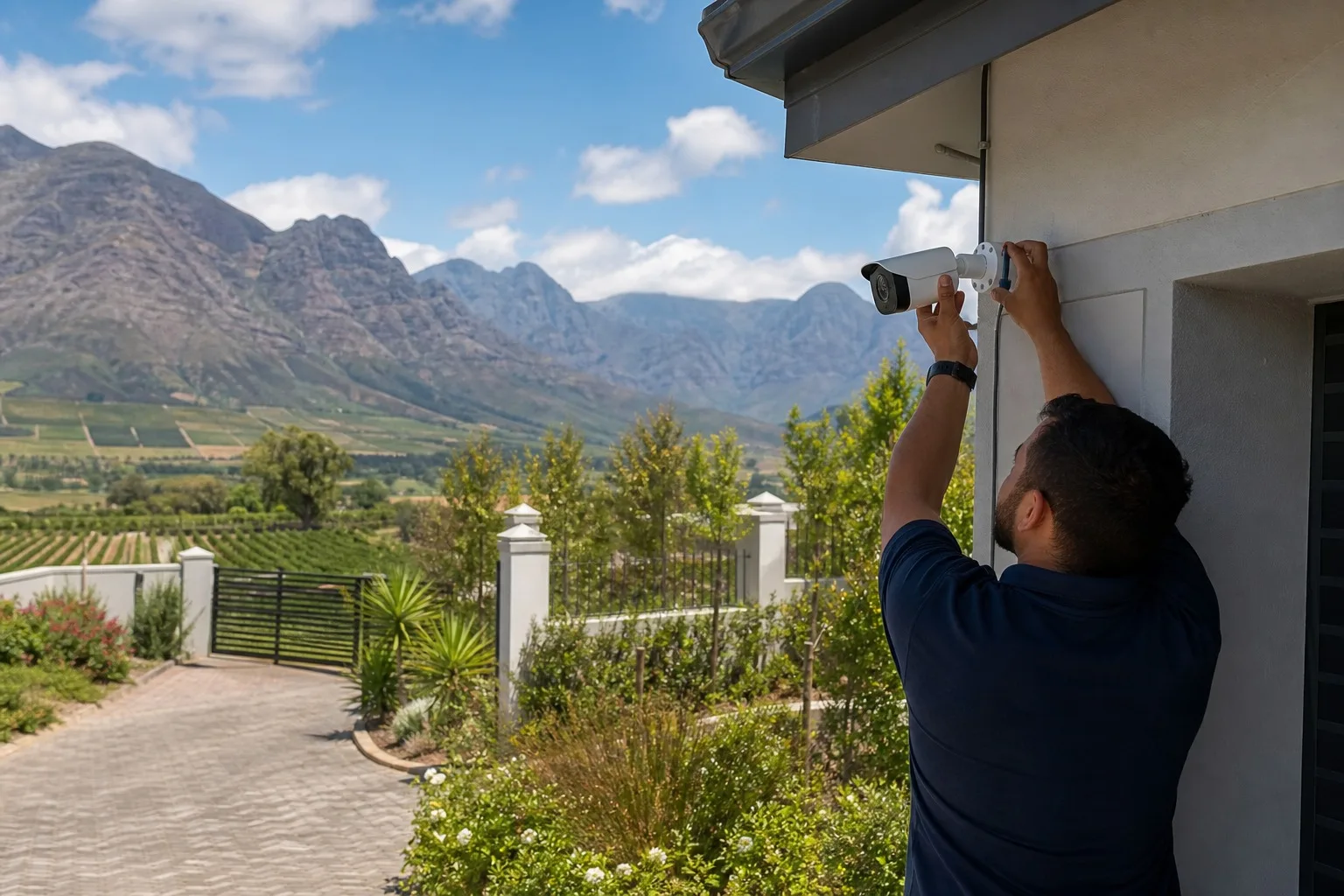
When people start thinking about CCTV, the first question is almost always "how many cameras do I need?": and it is the wrong question. More cameras is not more security. Four cameras pointed badly will miss the things that matter, while three placed well will cover every way onto your property. Good CCTV is about planning, not quantity. Here is how we think about coverage for a Worcester home, farm or business.
Start with the real entry points
Before anyone talks about cameras, walk your property and ask a simple question: how would someone actually get in? The front gate, the back door, the side passage, the spot where the boundary wall is lowest, the yard where vehicles come and go. These are the points worth watching. A camera covering a blank stretch of wall looks reassuring and protects nothing; a camera covering the gate earns its keep every day.
- Gates and driveways: where people and vehicles arrive.
- Doors and ground-floor windows: the usual ways in.
- Blind spots: the corner you cannot see from the house.
- On a farm: sheds, workshops and fuel or equipment stores.
Coverage beats count
Once you know what matters, you place cameras to cover those points with as little overlap and as few blind spots as possible. A well-chosen wide-angle camera on a corner can watch two approaches at once. A camera at the right height captures a usable face or number plate instead of the top of a head. This is the difference between footage that helps and footage that just proves something happened: and it is the heart of how we plan a CCTV installation.
Day and night, sun and dust
Out here a camera has to earn its living in harsh conditions. Worcester summers are bright and hot, the light at dawn and dusk is exactly when you most want a clear picture, and valley dust gets into everything. That means proper weatherproof housings, good night vision, and cameras positioned out of the worst glare. A cheap camera that washes out in the morning sun or goes blind after dark is not security: it is a false sense of one.
Recording and remote viewing
Cameras are only half the system. The footage has to be recorded somewhere reliable: a proper NVR or DVR with enough storage to keep the days you care about: and you want to be able to check in from your phone wherever you are. For holiday homes and guest farms that sit empty off-season, remote viewing is the whole point: being able to glance at the property from town, or from anywhere, and know all is well.
Remote viewing leans entirely on a stable internet connection, which is why CCTV and WiFi so often go in together. If your network is patchy: common on a big valley property: it is worth sorting that at the same time; our guide to getting WiFi across the whole farmhouse explains how, and the WiFi and network work frequently happens alongside a camera install.
Repairs and upgrades
Plenty of properties already have cameras that have quietly stopped recording, or an old system that no longer shows a usable picture. You do not always need to start from scratch: often we can repair, re-aim or upgrade what you have, add a camera or two where the coverage falls short, and get remote viewing working again. It is usually cheaper than a full replacement and gets you back to a system you can actually rely on.
The bottom line
How much footage should you keep?
A question that catches people out is storage: how many days of footage your system holds before it records over the oldest. For most homes a couple of weeks is plenty; you will know within days if something has happened. But for a holiday property or guest farm that you only visit now and then, it is worth keeping longer, so that when you do check in you can look back over the whole gap rather than just the last few days.
It comes down to how many cameras you run, the quality you record at, and the size of the drive in the recorder. We size the storage to the way you actually use the property, so you are not paying for a drive you will never fill: or worse, losing the footage you needed because it recorded over too soon. It is a small detail at install time that makes all the difference the day you actually need the footage.
If you are planning a wider upgrade alongside your cameras, it is worth talking to a local DStv installer in Worcester who can handle the signal, WiFi and security side in one visit.
Do not start by counting cameras. Start by walking your property, finding the points that matter, and planning coverage that genuinely watches them. Get that right and a modest, well-placed system will do more than a wall full of cameras pointed at nothing. We plan, install and repair CCTV for homes, farms and businesses across Worcester and the Breede River Valley: get in touch for a coverage plan that fits your property.