Getting WiFi to reach the whole farmhouse
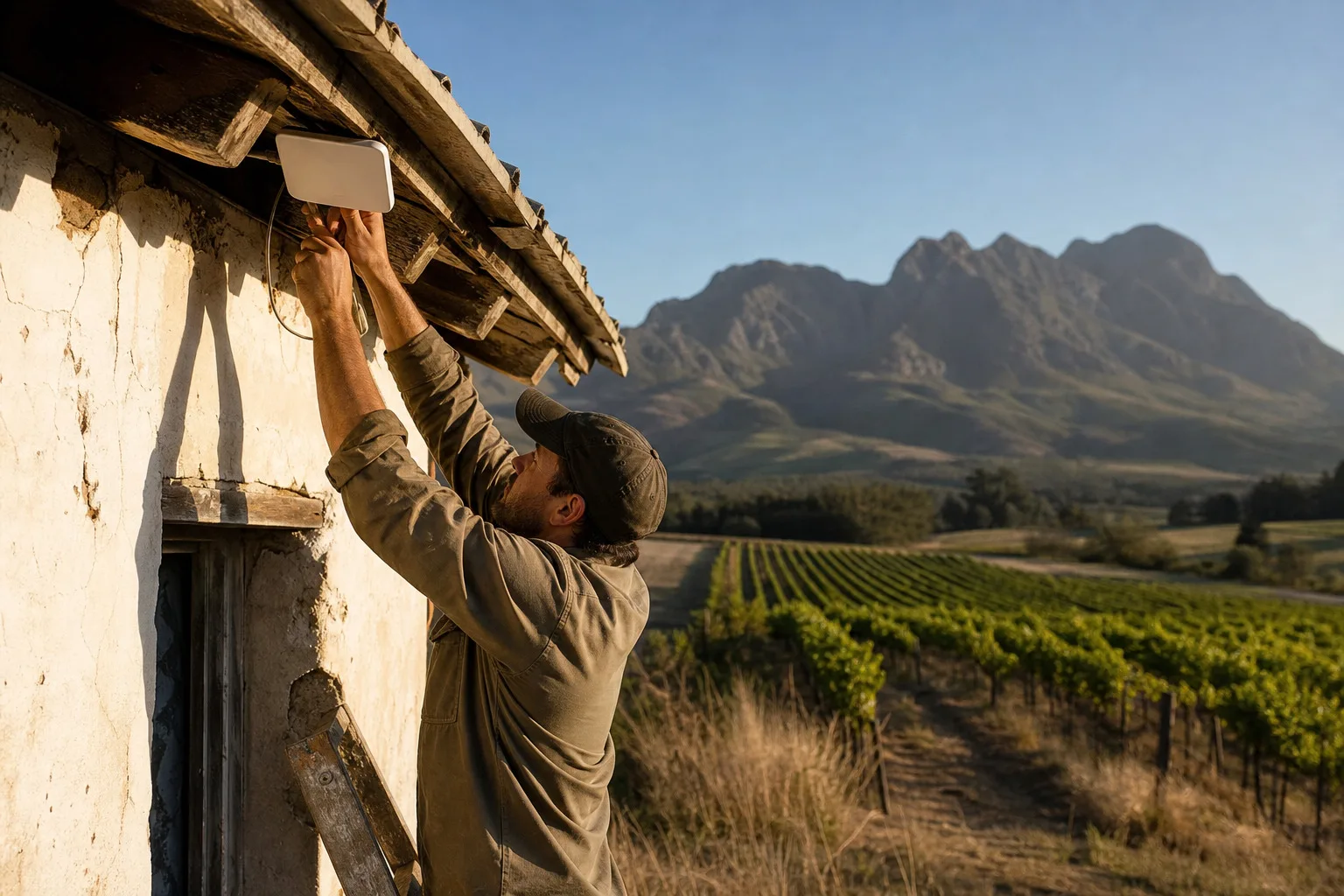
One router sitting in the lounge rarely covers a whole farmhouse: and in the Breede River Valley, where homes are often thick-walled, double-storey and surrounded by outbuildings, it barely covers half. If your WiFi dies in the back bedroom, drops on the stoep and never reaches the workshop or the cottage across the yard, you are not imagining it. Farmhouse WiFi is genuinely harder than town WiFi, and it needs more than a single box to do properly.
Why farmhouse WiFi is so tricky
Two things work against you out here. The first is construction: old valley farmhouses were built with thick stone or double-brick walls that block a wireless signal far more than modern drywall. The second is distance. A router was designed to cover a normal house, not a homestead with a separate flat, a workshop and a patio fifty metres off. Push a signal through enough walls and across enough open ground and it simply runs out of strength.
The result is dead spots: rooms and corners where the WiFi symbol shows but nothing actually loads. Throwing a "better" router at the problem rarely helps, because the limit is physics, not the box.
Mesh systems: the right tool for big homes
The proper fix for a sprawling property is usually a mesh system. Instead of one router shouting from the lounge, a mesh uses several units spread through the house and outbuildings, each handing your phone or laptop seamlessly to the next as you move. You get one network name, full strength everywhere, and no more switching networks as you walk from the kitchen to the stoep.
- One seamless network across the whole property.
- Units placed to push coverage exactly where the dead spots are.
- Easy to extend later: add a node for a new building.
Access points and cabling: the gold standard
For the most reliable coverage: and for getting a strong signal out to a distant building: nothing beats running a proper network cable to a wired access point. It sounds like more effort, and it is, but a cable does not care about thick walls or distance. We run structured cabling to where it matters, mount a tidy access point, and suddenly the workshop or the cottage has full-strength WiFi as if the router were in the next room. This is the heart of our WiFi, fibre and network cabling work, and it is what we reach for when a farm property really needs to stay connected.
Start with a survey, not a guess
The mistake we are most often called out to undo is hardware bought and installed on a hunch: a booster plugged in halfway down a passage that does not actually reach the problem room. We start every job with a quick coverage survey, walking the property to find exactly where the signal falls away and why. Only then do we know whether you need a two-unit mesh, a wired access point in the flat, or a full structured-cabling job. It saves you buying kit you do not need.
WiFi and the rest of your setup
Strong, stable internet is increasingly the backbone of everything else on a property. Your Explora or Ultra decoder leans on it for Catch Up and streaming, and a CCTV system needs a solid connection to give you reliable remote viewing on your phone when you are away from the farm. Sorting the WiFi properly often makes two or three other things work better at once, which is why we frequently do it alongside a camera or decoder job in a single visit.
If you are getting a guest farm or guesthouse ready for visitors, reliable WiFi is no longer optional: guests expect it, and a pre-season once-over is the time to fix it. There is more on that in our guide to getting a guesthouse signal-ready.
The bottom line
Wired where it counts, wireless everywhere else
The best farmhouse networks are usually a hybrid. We run a wired backbone to the buildings that really matter: the main house, the office, the flat you let out: and then let wireless handle the day-to-day roaming around each building. A cable carrying the signal to a distant point, with a wireless access point at the end, gives you the reliability of a wired link and the convenience of WiFi where you actually use it.
It also future-proofs the property. Once the cabling is in, adding coverage to a new building or upgrading the wireless kit later is a small job rather than starting over. On a working farm where things grow and change, that flexibility is worth a great deal: and it means the network keeps up with the property instead of falling behind it.
A solid network is only half the picture: for the TV and decoder side of a farm setup, it helps to work with DStv installers in Worcester who understand valley properties inside and out.
You do not have to live with WiFi that gives up halfway down the passage. With the right mix of mesh, access points and a little cabling, we get full, stable coverage from the main house out to the furthest outbuilding. We sort farmhouse and home networks right across Worcester and the Breede River Valley: tell us where the dead spots are and we will plan the cleanest fix.